Q4. How did you integrate technologies – software, hardware and online – in this project?
- Oct 11, 2025
- 2 min read
Updated: Oct 14, 2025
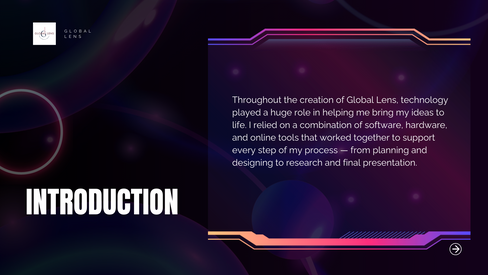
Throughout the creation of Global Lens, technology played a huge role in helping me bring my ideas to life. I relied on a combination of software, hardware, and online tools that worked together to support every step of my process — from planning and designing to research and final presentation.
Starting with hardware, I mainly used my MacBook Air and iPhone. My laptop became the base for all design and editing work, while my phone was essential for capturing photos, taking quick notes, and checking layouts on a smaller screen to see how they would look digitally. The camera I used, Canon EOS 80D with a 50mm prime lens mounted on a tripod, also helped me improve my photography skills, allowing me to shoot high-quality, well-lit images that became the foundation of my editorial spreads.
When it came to software, I used a wide range of creative apps. Photoshop was one of my main tools for editing and adjusting photographs — fixing lighting, enhancing contrast, and giving all images a consistent tone. I also used PhotoRoom, PhotoLight, and Object Remover to clean backgrounds, remove distractions, and refine visuals. These tools made my photos look more professional and cohesive across the magazine.
For the layout and design, Canva was my go-to platform because it allowed me to experiment with different compositions and typography quickly. I also created my final mock-ups using Heyzine, which gave me the chance to present my magazine interactively and realistically.
Throughout the process, I used Wix to document my production journey, keeping track of updates, research, and reflections. It became like a digital diary that helped me stay organized and visually consistent. Spark Site also provided inspiration and guidance for designing layouts and structuring content effectively.
In terms of online tools and platforms, I used Pinterest for collecting visual inspiration and building mood boards. It helped me shape the aesthetic direction of Global Lens. Instagram and Safari were essential for audience and market research — Instagram especially helped me understand current design trends and how modern magazines interact with their readers online.
For planning and organization, I relied on Word for writing notes, reflections, and bullet points, while PowerPoint helped me create presentations during my planning and evaluation stages. I also watched YouTube tutorials to learn new editing techniques and improve my understanding of both Photoshop and Canva features.
Altogether, these tools made my workflow smoother and more efficient. They allowed me to experiment freely, solve problems independently, and refine my ideas visually and technically. The integration of all these technologies — from the camera and laptop to editing apps and online platforms — helped me create a final product that feels professional, cohesive, and modern.
Looking back, this project taught me how important technology is in every stage of media production. It not only supported the technical side of Global Lens but also expanded my creative possibilities, allowing me to turn my ideas into something real and visually powerful.
Below is my presentation for this topic, together with its link for a better perspective:




Comments