Choosing Reality Over Performance
- Oct 1, 2025
- 3 min read
Updated: Oct 12, 2025
Why My Photoshoot Took Place in the World, Not a Studio
When I first began planning my magazine, one of the obvious steps was to consider more than one photoshoot. After all, in most magazines—whether they are about fashion, lifestyle, or culture — the photoshoots are central. They provide carefully constructed visuals, often styled to communicate the brand identity of the publication. But as I developed my idea further and reflected on the specific theme of my magazine—politics and media—I realized that all of the images in the layout representing staged photoshoots would be not only unnecessary, but even counterproductive.
Politics is not a world of polished poses or designer outfits. It is not a performance in the way that fashion is. Instead, politics is about institutions, ideologies, decisions, and power structures that shape entire societies. The media, likewise, is about narratives, information, and representation. Multiple photoshoots would have felt artificial...
Why I Turned to Real Images
Instead of staging, I turned to my own photographs taken in Washington and New York. These cities are not only iconic, but they are also the real epicentres of the themes I am dealing with. Washington, D.C. is the political heart of the United States — The White House, the centre of executive power, is a symbol recognized globally. New York, on the other hand, is the hub of finance, law, and media: Wall Street for the economy, the Supreme Court for justice, and countless media institutions that have shaped public opinion for decades.
By using images from these locations, I allow the magazine to reflect real-world spaces and structures of influence. These are not symbolic backdrops; they are the actual environments where decisions are made and narratives are created. No set design could replicate the weight of these places.
The Photographs I Selected
The White House (Washington, D.C.) - I chose this image because it is one of the strongest representations of political authority in the world. The photo also includes the people outside the gates—tourists, citizens, and observers—capturing the tension between power and public.

Wall Street and the New York Stock Exchange- This photo represents the inseparable link between politics and finance. Decisions in Washington are echoed on Wall Street, and vice versa.

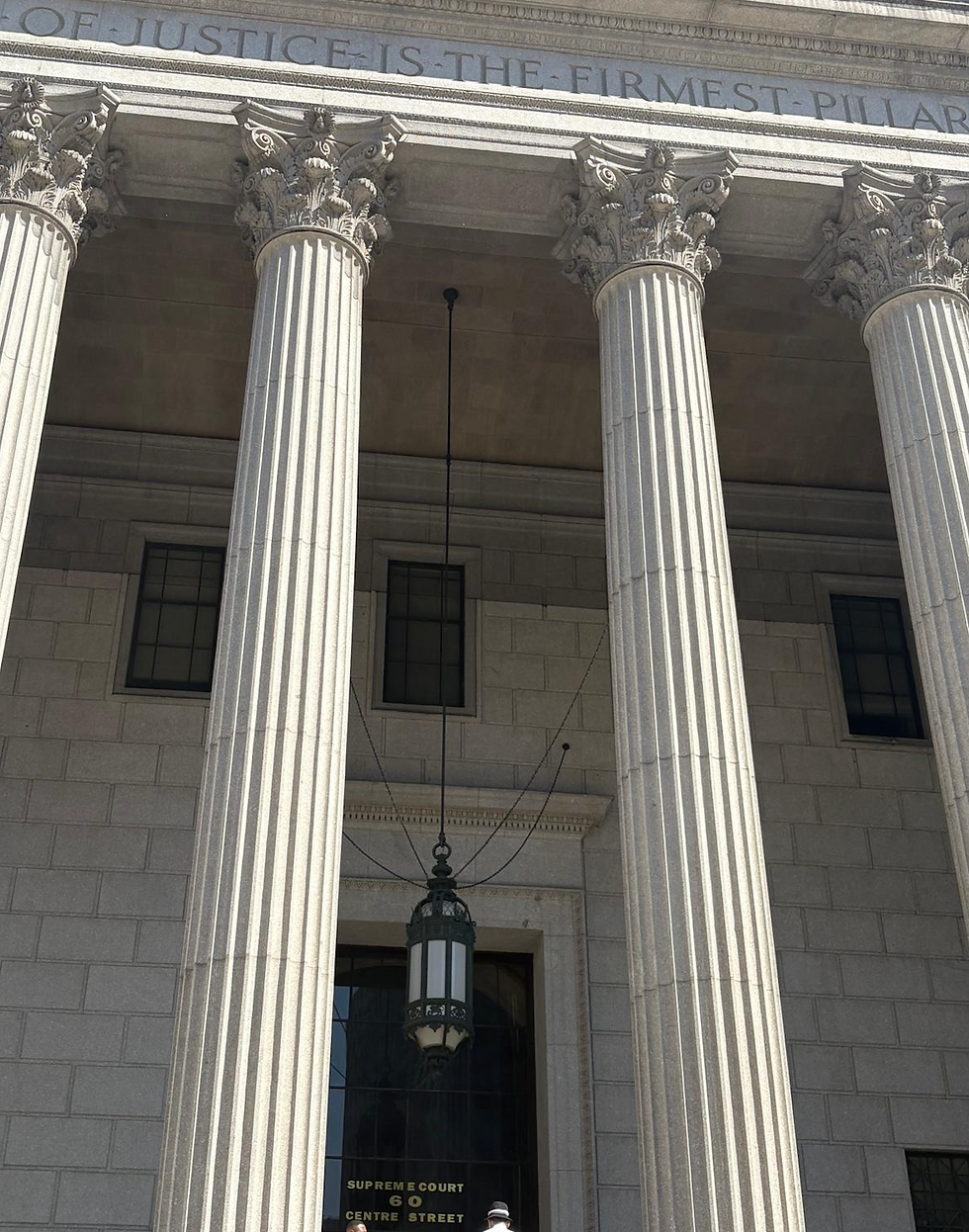
The New York Supreme Court- This location symbolizes the law, justice, and accountability. Without the legal system, politics and finance would spiral unchecked. Adding this image broadened my scope, reminding readers that governance is also about rules and enforcement.
The Television Exhibition (Media as a Lens)- Finally, I decided to include a photo I took recently of an installation of old televisions. Media is the fourth force in society—it does not just report politics, it shapes how politics is understood. The televisions, stacked and glowing with different screens, reminded me of how information has been transmitted and manipulated throughout history. By including this photograph, I grounded my magazine not just in politics and economics, but in the role of communication itself.

Why This Choice Fits My Style and Content
The style of my magazine is serious, analytical, and documentary-like. One photoshoot taken in a serious matter like the one in my previous post, fits. But more glossy ones would have undermined that style by making politics look like fashion. The content I am working with—media, politics, justice, finance—requires visuals that carry weight and credibility. That credibility comes not from styling choices but from the authenticity of real places.
By using photographs I personally took, I also add a layer of authenticity. I am not recycling stock images, nor am I fabricating staged ones. I am showing the real environments that I have witnessed myself, which adds honesty to my project.
In the end, choosing not to do a photoshoot was not a compromise—it was a decision that strengthened my magazine. It forced me to think deeply about what visuals truly match the content I am creating.
Sometimes the best creative choice is to not follow the usual path. By rejecting the expected multiple photoshoots, I created a visual language that is consistent with the seriousness of my theme and respectful of the subject matter I am addressing.


Comments